Missed the webinar? Here are Investing.com’s top 10 stock picks for 2026
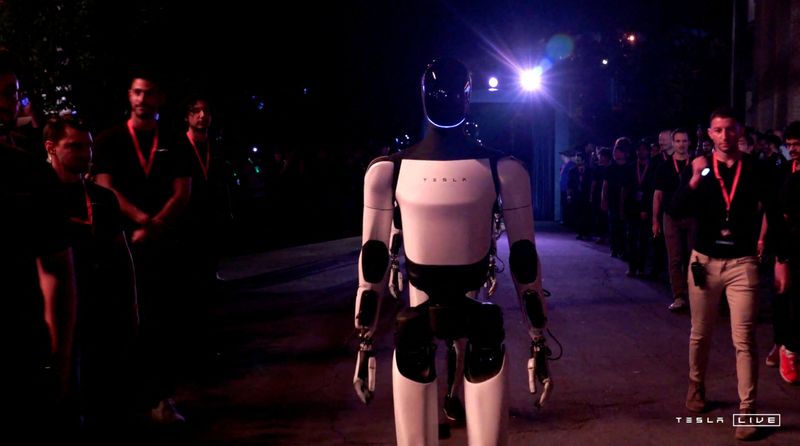
Investing.com -- Morgan Stanley expects the market for humanoid-focused semiconductors to expand dramatically over the next two decades, projecting a total addressable market of $305 billion by 2045.
The estimate, from analyst Shawn Kim, is rooted in what the bank describes as a structural shift toward “physical intelligence,” which it calls “a pivotal chapter in human history.”
According to Morgan Stanley, the rapid rise of embodied AI, machines that can understand and interact with the physical world, is accelerating as intelligence costs fall and compute becomes cheaper.
“The rate of change is incredible, favoring those best able to adapt,” Kim wrote.
The analyst argues that the opportunity in humanoids extends beyond the headline robot manufacturing numbers often cited in existing research.
Instead, it shifts the focus to the semiconductor layer, where Morgan Stanley sees the deepest value creation.
“We expect a humanoids semiconductor TAM of US$305bn by 2045,” the analyst wrote, adding that the estimate covers “key AI processors and sensors.”
Morgan Stanley forecasts that the bill of materials for humanoids will rise by about 15% between 2025 and 2030 and a further 40% by 2045 as compute requirements increase, even as cost per FLOP continues to decline.
The firm says physical-AI chips differ from traditional AI processors because they must support “perception, reasoning and control in real-time at edge devices.”
To help investors navigate the emerging ecosystem, Morgan Stanley introduced its “Humanoid Tech 25,” a list of companies it says are leading in enabling technologies. Some of the companies that make the list include Nvidia, AMD, STMicroelectronics, Samsung, Sony, Infineon and Alibaba.
The bank highlights three areas where most of the value resides: “the AI brain technology,” “AI vision,” and “analog chips for sensing.”