Japan records surprise trade deficit in July as exports weaken further

Introduction & Market Context
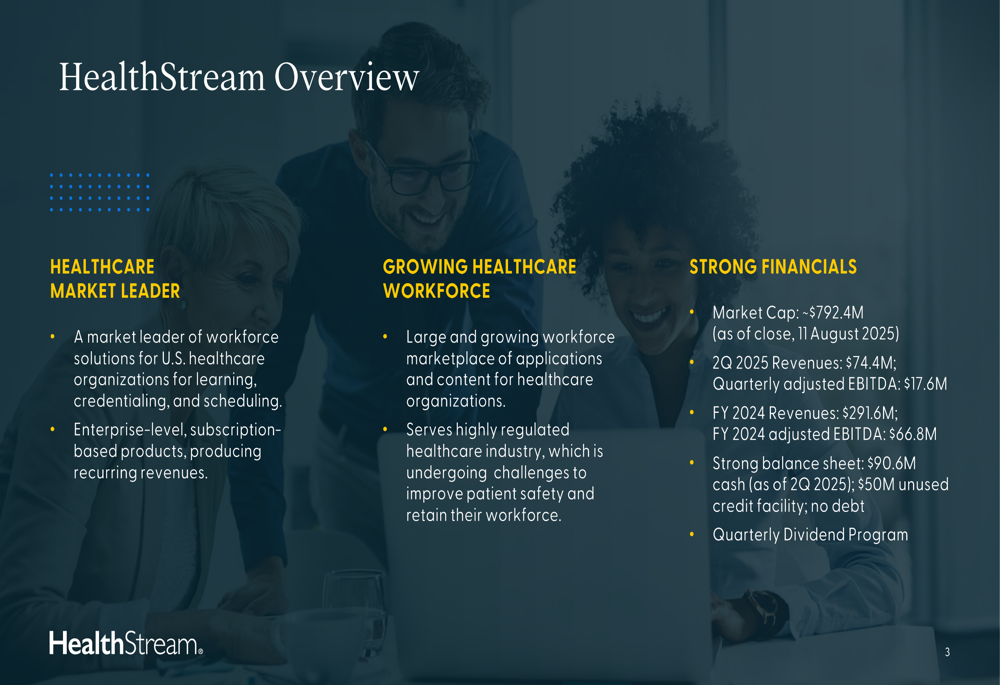
HealthStream (NASDAQ:HSTM), a leading provider of workforce solutions for the healthcare industry, presented its Q2 2025 investor slides highlighting the company’s strategic shift toward a platform-based business model. The company operates in the $4.9 trillion healthcare industry, which represents 17.6% of U.S. GDP and remains the fastest-growing sector of the American economy.
With a total addressable market of 12.6 million healthcare professionals, HealthStream continues to position itself as an enterprise-level provider of subscription-based products generating recurring revenue. The company maintains a strong balance sheet with $90.6 million in cash, no debt, and an unused $50 million credit facility as of Q2 2025.
As shown in the following overview of HealthStream’s market position and financial highlights:
Quarterly Performance Highlights
HealthStream reported Q2 2025 revenue of $74.4 million, representing a 4% year-over-year increase and matching analyst expectations. The company exceeded earnings projections with EPS of $0.18, beating the forecast of $0.16 by 12.5%. Operating income rose 33.4% to $5.9 million, while net income increased 29.3% to $5.4 million compared to the same period last year.
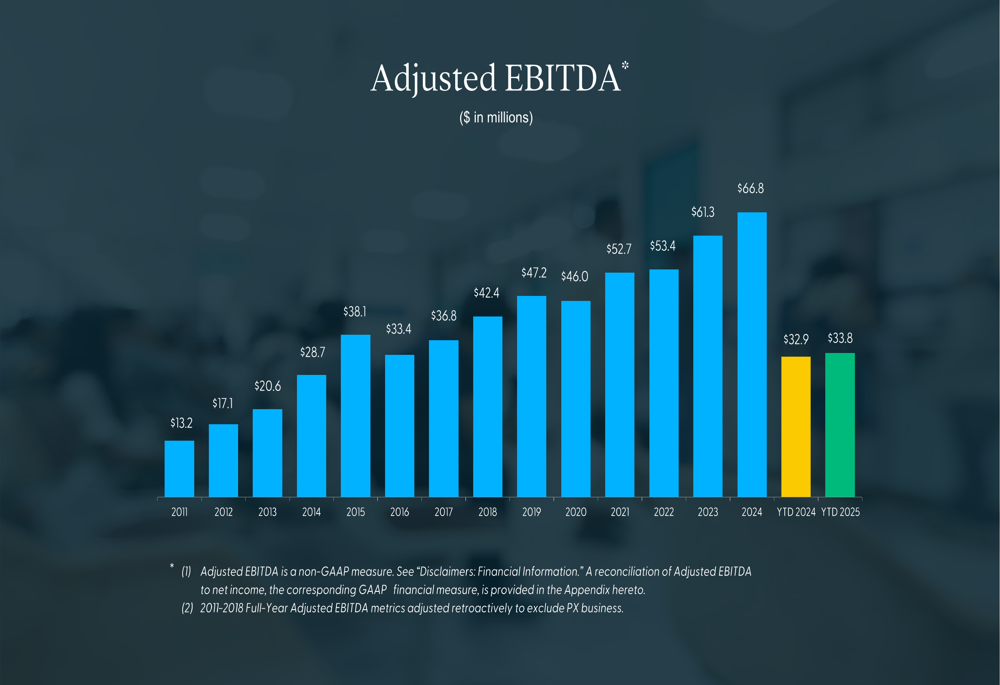
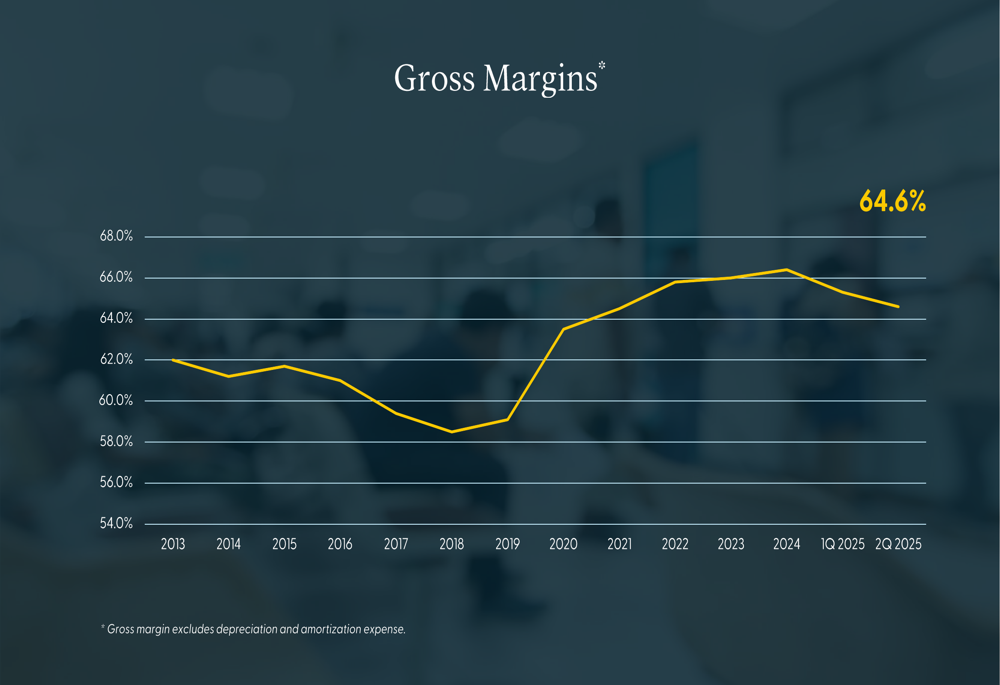
The company’s adjusted EBITDA for the quarter reached $17.6 million, resulting in an adjusted EBITDA margin of 23.7%, which falls within the company’s medium-term target range of 21-24%. However, gross margin declined to 64.6% from 66.8% in the previous year, slightly below the company’s target range of 65-68%.
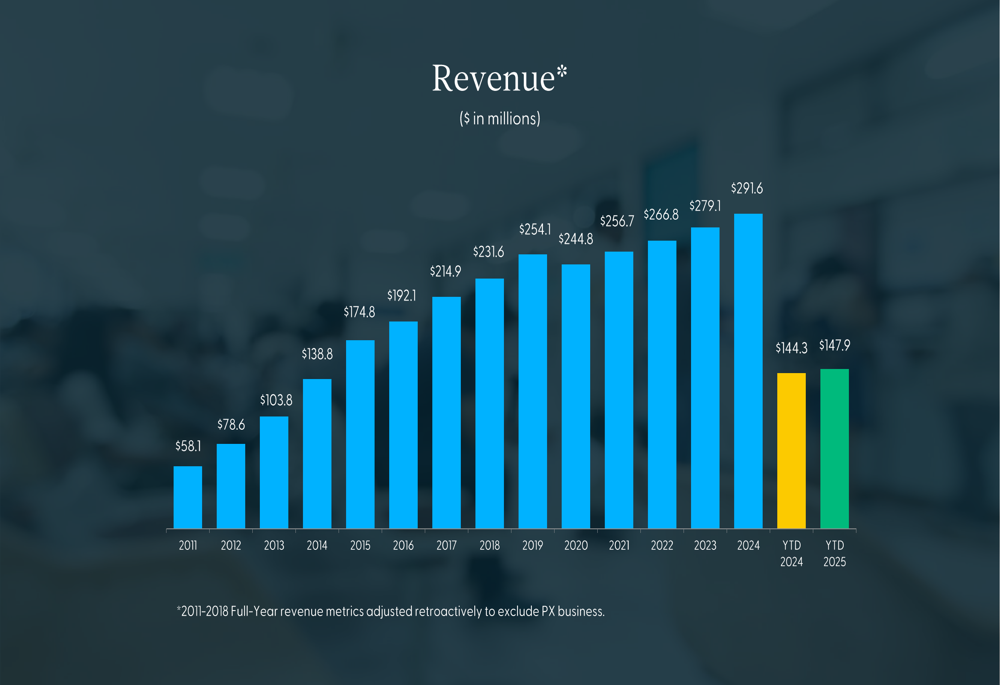
The following chart illustrates HealthStream’s revenue growth trajectory since 2011:
Similarly, the company’s adjusted EBITDA has shown consistent growth over the years:
While gross margins have experienced some pressure, they remain relatively stable:
Strategic Initiatives
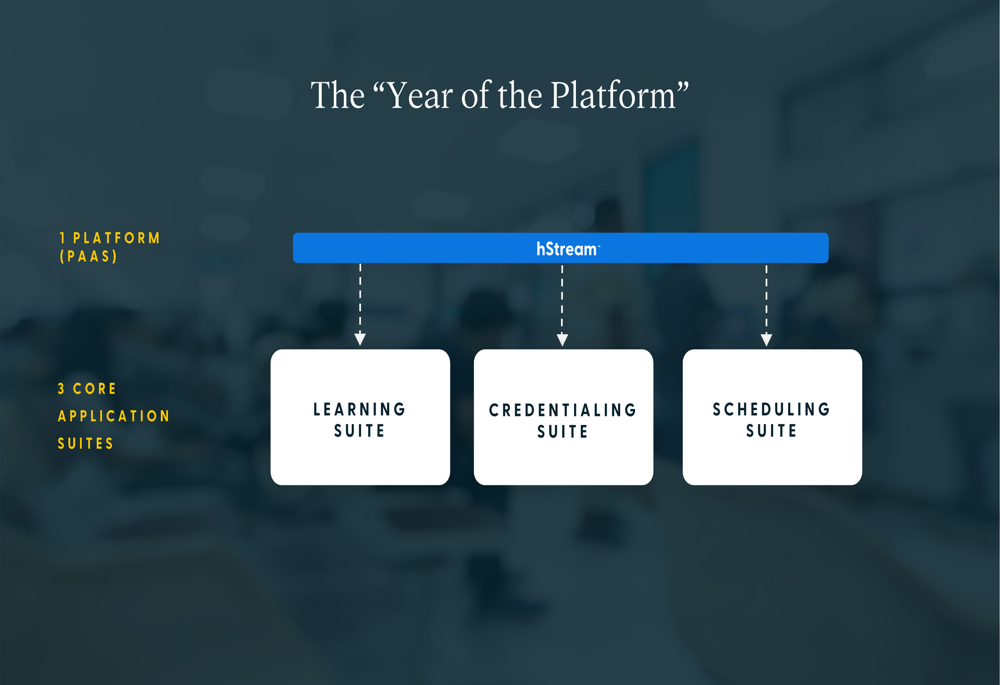
HealthStream has designated 2025 as the "Year of the Platform," focusing on transitioning from a Software-as-a-Service (SaaS) model to a Platform-as-a-Service (PaaS) architecture. The company’s hStream platform serves as the central connection point for its three core application suites: Learning, Credentialing, and Scheduling.
As CEO Bobby Frist emphasized in the earnings call, "We’re in this transition of trying to move from SaaS applications to a PaaS, a platform as a service architecture. This is the year of the platform."
The hStream Developer Portal has gained significant traction, with over 460 developers from 194 customer accounts accessing the platform APIs as of Q2 2025. This platform strategy aims to enhance interoperability among HealthStream’s application suites while enabling integration with partner and customer systems.
The platform strategy is visualized in the following slide:
In January 2025, HealthStream launched its AI-driven Learning Experience application, the first hStream platform-native software. This application empowers healthcare professionals with curated skills and professional pathways, engaging the workforce with social features and mentoring capabilities.
Competitive Industry Position
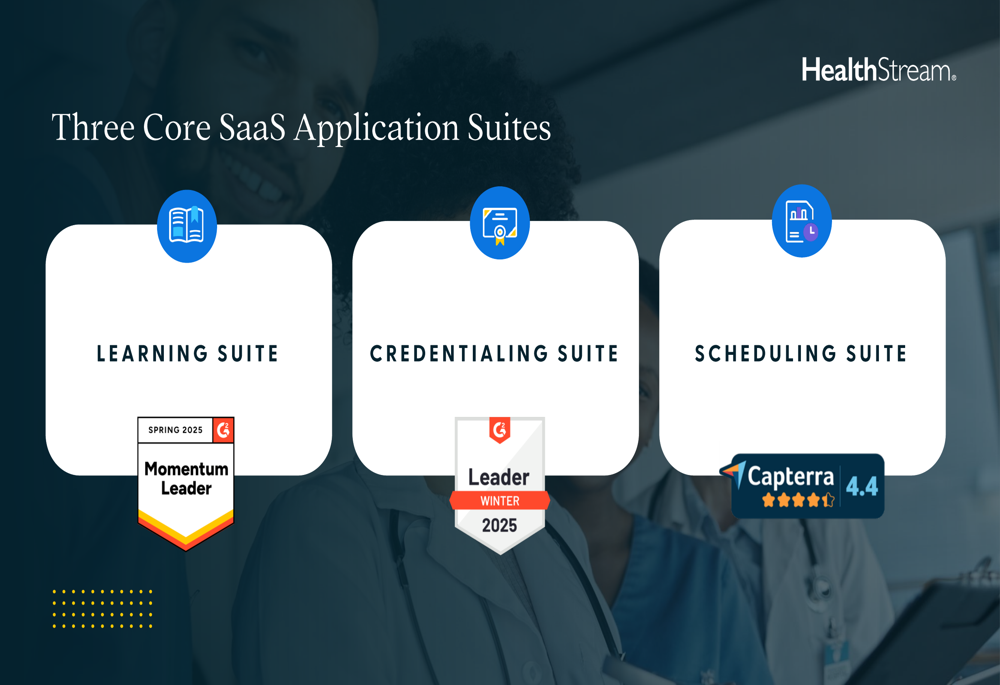
HealthStream maintains strong market positions across its three core application suites. The Learning Center is ranked #1 in Best Healthcare Software by G2 in 2025, while CredentialStream holds the #5 position. Shiftwizard, the company’s scheduling solution, is rated as the highest-rated staff scheduling solution for hospitals by Capterra with a 4.4-star rating.
The company’s core application suites and their market recognition are illustrated below:
HealthStream’s growth strategy focuses on expanding its customer network, increasing the value of each account through cross-selling additional solutions, growing new revenue streams via partners and PaaS capabilities, and executing complementary M&A opportunities.
Customer case studies demonstrate the company’s success in expanding revenue per employee over time. For a Tennessee-headquartered health system with 24,000+ employees, annual revenue per employee grew from $6.25 in 2004 to $92.86 in 2025 through the addition of multiple subscriptions and services.
Forward-Looking Statements
HealthStream projects consolidated revenue between $297.5 million and $303.5 million for fiscal year 2025. Net income is expected to range from $19.5 million to $22.4 million, with adjusted EBITDA forecasted between $68.5 million and $72.5 million.
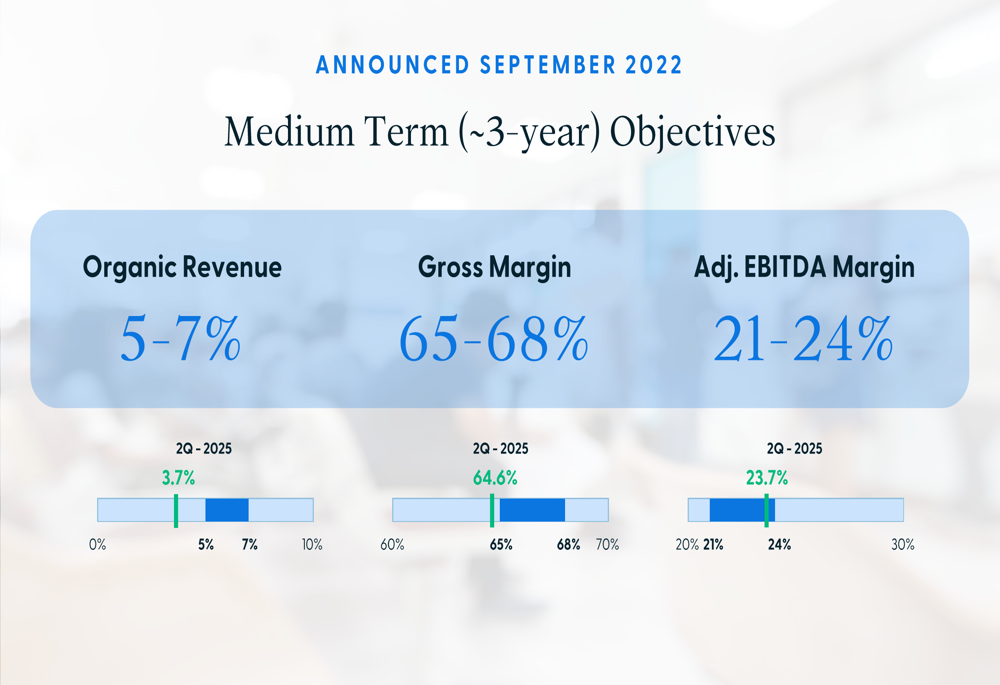
The company’s medium-term objectives, announced in September 2022, include targets for organic revenue growth (5-7%), gross margin (65-68%), and adjusted EBITDA margin (21-24%). As of Q2 2025, HealthStream is meeting its adjusted EBITDA margin target at 23.7%, but falling slightly short on organic revenue growth (3.7%) and gross margin (64.6%).
The company’s progress toward these medium-term objectives is shown below:
HealthStream continues to face challenges including declining gross margins due to increased cloud hosting costs and cautious purchasing behavior in the healthcare sector amid macroeconomic uncertainties. However, the company’s strong balance sheet, consistent dividend program (increased by 10.7% in February 2025), and strategic platform initiatives position it to navigate these challenges while pursuing long-term growth opportunities in the healthcare workforce solutions market.
As of August 14, 2025, HealthStream’s stock was trading at $25.94, down 2.3% for the day, and near its 52-week low of $25.36, suggesting investors may be taking a cautious approach despite the company’s solid Q2 results and strategic initiatives.
Full presentation:
This article was generated with the support of AI and reviewed by an editor. For more information see our T&C.