S&P 500 struggles for direction as investor await inflation data
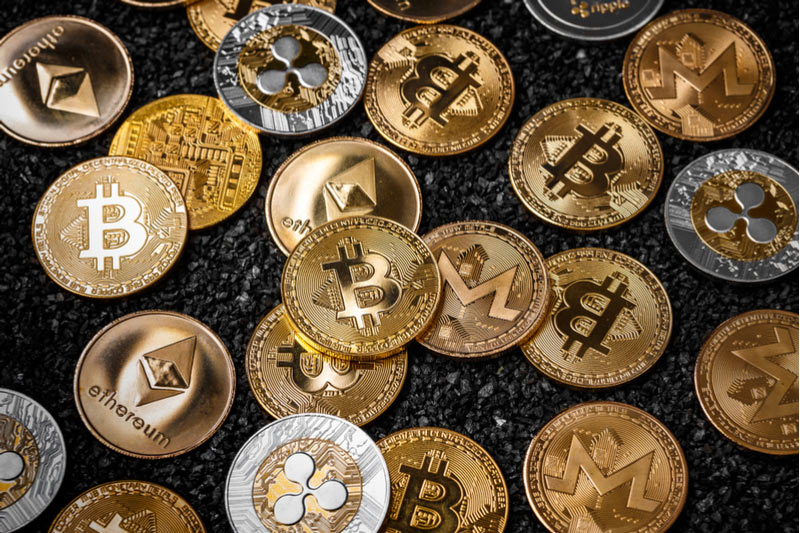
Investing.com -- Satoshi Nakamoto, the presumed pseudonymous creator of Bitcoin, described it as “peer-to-peer electronic cash” designed for direct payments without financial intermediaries.
{{pro_promotion | Get deeper crypto insights, analyst picks, and market research by upgrading to InvestingPro - get 55% off today}}
Satoshi’s white paper, released in 2008, envisioned a system free of third-party friction, where users could transact globally and make “small casual transactions” that traditional payment rails make uneconomical.
Sixteen years later, the gap between the original concept and Bitcoin’s real-world use has widened, while USD-pegged stablecoins have taken on the role of practical digital cash.
Bitcoin today behaves more like “digital gold” than a spendable currency. Its price swings—often double-digit moves over short periods—have limited mainstream use in commerce. Merchants rarely price goods in BTC, and adoption remains confined to niche users or regions with unstable local currencies.
Mizuho analyst Dan Dolev argues that this reality is far from the white paper’s intent. By contrast, stablecoins solve the volatility issue by maintaining a 1:1 peg to the dollar through fiat reserves, giving them the stability needed for everyday payments.
They have grown into a dominant medium in the crypto economy, with a market cap of more than $210 billion in 2024 and transaction volumes of $26.1 trillion.
Stablecoins also align more closely with emerging regulatory frameworks. Dolev highlights that new U.S. laws—the Clarity for Payment Stablecoins Act and the GENIUS Act—lay out licensing, reserve, and oversight standards for issuers. The EU’s MiCA regime does the same.
These rules “provide clear standards for stablecoin issuance and oversight,” opening the door for adoption by banks, fintechs and payment networks. Bitcoin, the analyst notes, continues to face uncertainty on classification and potential restrictions.
“Bitcoin’s regulatory ambiguity constrain its potential as everyday digital cash,” Dolev said.
Quantum computing adds another contrast. While both types of assets rely on cryptography, the analyst says stablecoins may be more resilient because issuers can freeze and reissue tokens if keys are compromised. Bitcoin’s decentralized design leaves no such fallback.
Stablecoins also reinforce U.S. dollar dominance rather than challenge it. Officials have argued they “could strengthen the global role of the U.S. dollar,” giving them political support that Bitcoin lacks.
Bitcoin’s ethos positions it as an alternative to central-bank money, a stance that may invite future resistance.
Overall, Dolev argues that stablecoins offer the usability, stability and regulatory alignment that bring them closer to Satoshi’s original cash vision—even if they do it through a trust-based model rather than Bitcoin’s pure decentralization.
Visa and Mastercard appear best positioned to benefit from this shift.
Meanwhile, USDC issuer Circle is a dominant stablecoin operator, but Dolev remains concerned “about its ability to monetize in a downward rate environment and as competition continues to grow as stablecoins proliferate.”
For Cash App owner Block, the company’s attempt to turn Bitcoin into a payment mechanism is a make-or-break moment in shifting BTC from store of value to payment mechanism,” he said.